
Bearded Dragon Care Guide: Setup, UVB & Feeding

Bearded dragons are active, day-dwelling lizards that rely on their enclosure for heat, UVB, light, security and opportunities to behave naturally. A good setup is the foundation of long-term care.
This practical guide covers enclosure size, heating, UVB, humidity, feeding, substrate, enrichment and the equipment to prepare before bringing a bearded dragon home. Individual animals can differ, so always check the needs of the dragon you are buying and contact a reptile-experienced vet if you have health concerns.
Before You Buy a Bearded Dragon
Build and test the enclosure before the animal arrives. Do not wait until collection or delivery day to discover that the basking area is too cool, the UVB is positioned incorrectly or the humidity is too high.
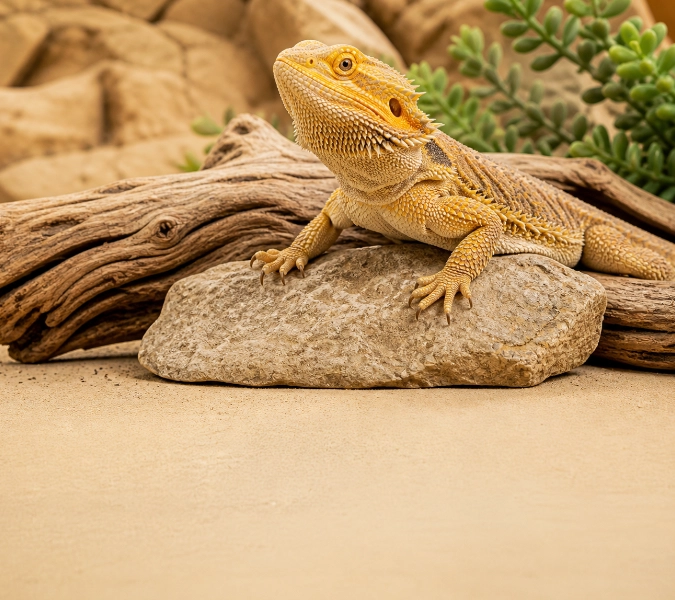

For an adult bearded dragon, a vivarium around 120 × 60 × 60 cm is a sensible minimum target. The enclosure should be secure, well ventilated, easy to clean and large enough to create a clear hot end and cool end.
West Cork Reptiles stocks a HabiStat Standard Vivarium – Oak – 122 × 61 × 61 cm, which is close to this adult-size guideline. Always plan the complete heating, lighting and internal layout before ordering.
Heating, UVB and Humidity
Bearded dragons need a temperature and light gradient so they can move between warmer, brighter areas and cooler, shaded areas throughout the day.
- Basking / hot end: approximately 38–42°C.
- Cool end: approximately 22–26°C.
- Night: lights should be off; if room temperatures fall too low, use a suitable non-light-emitting heat source.
- Humidity: normally around 30–40% at the cool end.
- UVB: create a measured UV gradient rather than relying only on the percentage printed on the lamp.
- Monitoring: use appropriate thermostat control and verify temperatures with reliable thermometers.
UVB supports vitamin D3 production and calcium use. For many normally pigmented bearded dragons, a useful basking target is around UVI 3.0–5.0, fading towards zero in the shaded area. Distance, reflector, mesh and lamp positioning all affect the final UV level.
The Arcadia T5 UVB Kit – Desert 12% – 24W can form part of an appropriate arid setup, but the installation distance and final UVI must still be matched to the enclosure and animal. Follow the manufacturer’s fitting and replacement guidance.
Feeding a Bearded Dragon
Bearded dragons are omnivores. Young dragons eat a greater proportion of live insects, while adults gradually take a larger proportion of greens.
Offer variety rather than relying on one feeder. Suitable live foods can include crickets, locusts and other appropriately sized invertebrates. Feeders should be well hydrated and gut-loaded before feeding.
A commonly used starting point is roughly 65% livefood and 35% greens for young dragons, moving towards around 40% livefood and 60% greens for larger adults. Safe greens can include watercress, rocket, chicory, cress, dandelion and grated butternut squash.
Dust livefood with suitable calcium and vitamin supplements according to the product instructions. Correct UVB, diet and supplementation work together, so more supplement is not automatically better.
Substrate, Hides and Enrichment
A good enclosure should allow climbing, basking, hiding and digging, not just provide an empty box with a heat lamp.
- Provide sturdy branches, rocks or other secure climbing and basking structures.
- Give the dragon access to secure hiding areas and shaded cover.
- For healthy adults, reptile-safe sand or a sand/soil style substrate can support natural digging behaviour when the rest of the husbandry is correct.
- Avoid calci-sand and loose substrates made from large bark pieces, wood chips, crushed walnut or corn cob granules.
- Spot clean waste promptly and keep food, water and furnishings clean.
- Bearded dragons are territorial and are generally best housed individually.
West Cork Reptiles stocks HabiStat Bearded Dragon Bedding, 10kg, a red sand and clay blend for naturalistic arid setups. As with any loose substrate, use it only as part of a correctly heated, ventilated and well-monitored enclosure.
What to Buy Before Your Bearded Dragon Arrives
The exact shopping list depends on the enclosure and animal, but this covers the main equipment most keepers need to plan.
- Suitable vivarium: enough space to create a proper heat and UV gradient.
- UVB system: high-output T5 style UVB with the correct reflector, distance and coverage.
- Basking heat source: selected for the enclosure and controlled safely.
- Monitoring: thermostat, thermometer / infrared temperature checking and hygrometer.
- Secure lamp fitting: correctly rated for the selected heat or light source.
- Suitable substrate: chosen for the age, health and complete setup.
- Hides and furnishings: secure cover, branches, rocks and safe basking surfaces.
- Shallow water dish: fresh water should be available and refreshed regularly.
- Food and supplements: suitable live insects, fresh greens, calcium and vitamin products.
Bringing Your Dragon Home
Run the finished vivarium for at least a week before the animal arrives so you have time to check temperature, humidity and UVB placement and correct any problems.
When buying from West Cork Reptiles, check the individual animal listing for morph, approximate age and current feeding information. Live reptiles are not sent by standard courier; collection or livestock delivery is arranged individually after the order.
If you are unsure whether your enclosure is ready, contact West Cork Reptiles before ordering. You can also review the Buying Info and Delivery Cost pages before checkout.
A Final Note on Health and Responsible Care
Good husbandry reduces risk, but it does not replace veterinary care. Changes in appetite, weight, movement, droppings, breathing or behaviour should be taken seriously.
Inadequate UVB, poor temperature control and incorrect calcium balance can contribute to serious problems such as metabolic bone disease. If you are concerned about your dragon’s health, contact a reptile-experienced veterinary professional.
Care references: this guide was prepared using current guidance from the RSPCA bearded dragon care guide and the Arcadia Reptile Lighting Guide, alongside current West Cork Reptiles product and buying information.