
Corn Snake Care Guide: Enclosure, Heating, Feeding

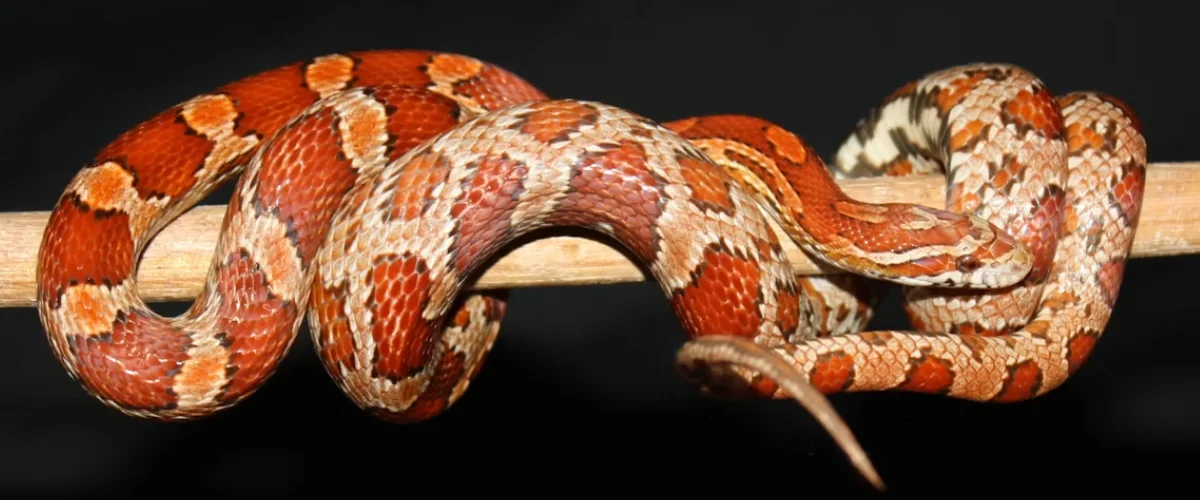
Corn snakes are active, non-venomous constrictors that are often recommended to newer snake keepers, but they still need a secure enclosure, a proper temperature gradient, suitable humidity, hides, enrichment and an appropriate frozen-thawed feeding routine.
This guide covers enclosure size, heating, humidity, UVB, feeding, substrate, enrichment and the equipment to prepare before buying a Corn Snake from West Cork Reptiles.
Before You Buy a Corn Snake
Set up and run the vivarium for at least a week before the snake arrives. This gives you time to check the temperatures, humidity, lighting and hides and to correct any problems before introducing the animal.
Enclosure Size and Security
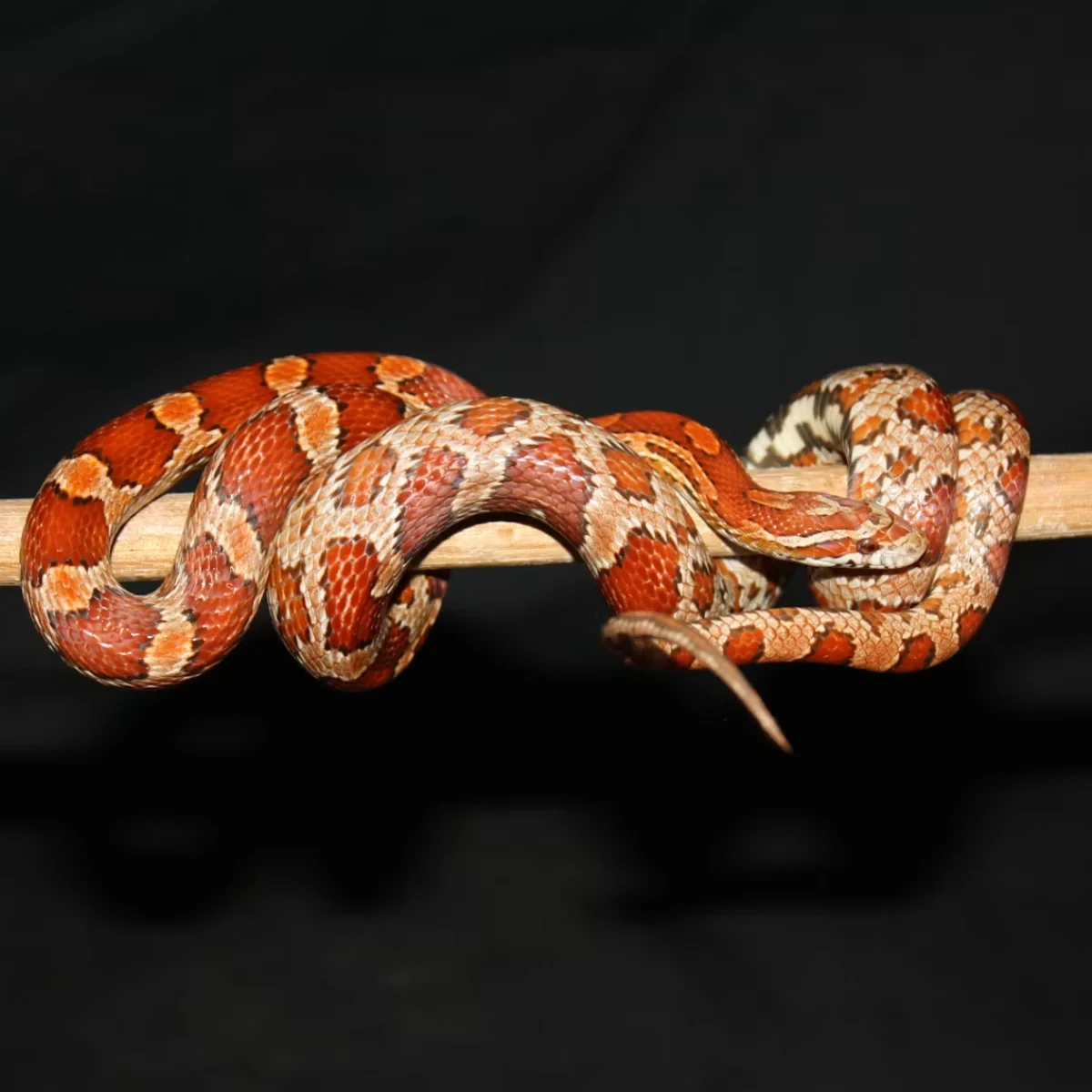
Corn snakes are active and can climb well. Their enclosure must be secure, well ventilated and large enough to allow natural movement without sacrificing access to hiding places.
The RSPCA recommends a vivarium long enough for the snake to fully stretch out, with the width and height each at least around one-third of the snake’s length. For example, a 150 cm Corn Snake needs a minimum enclosure of approximately 150 × 50 × 50 cm.
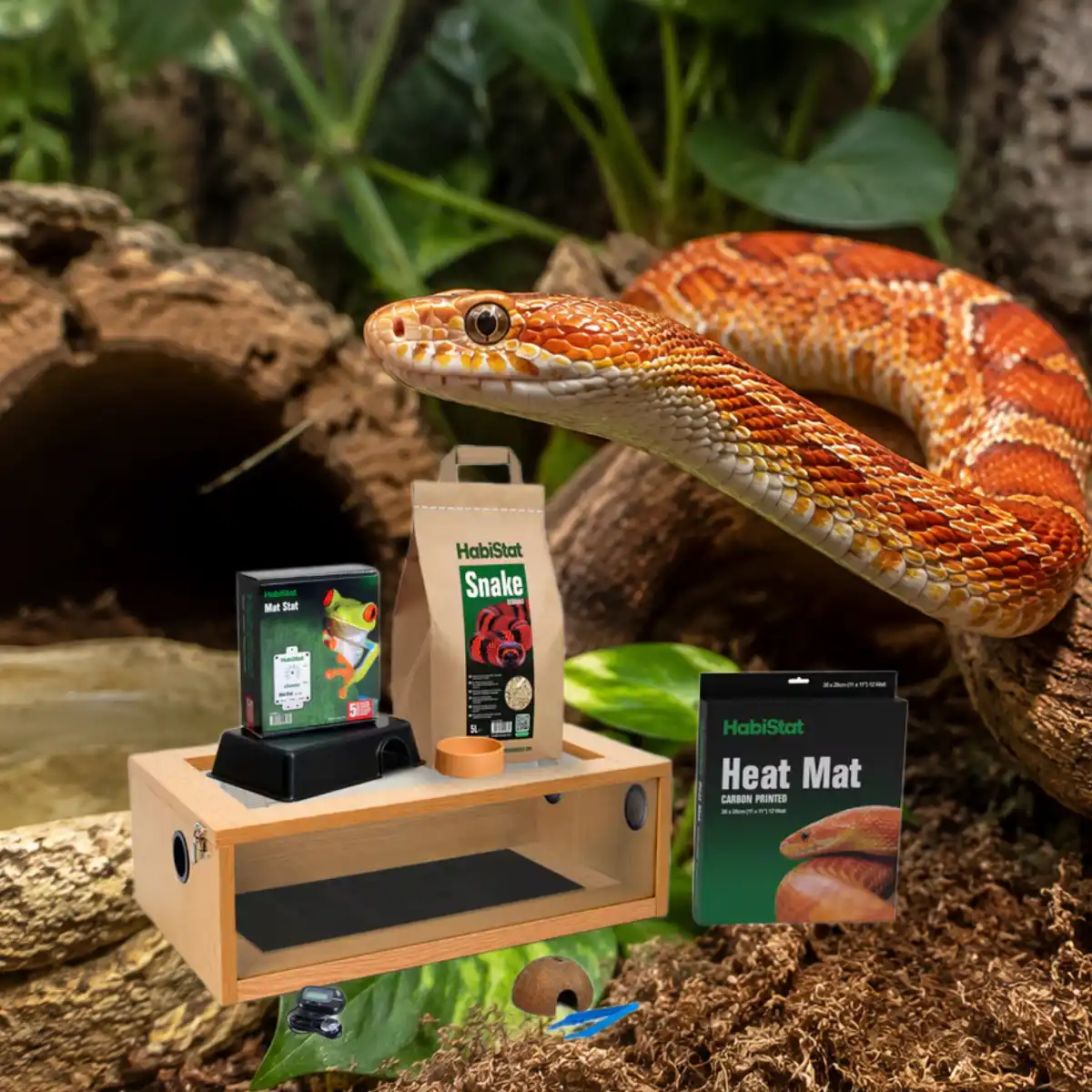
Hatchlings can start in a smaller enclosure, or in a larger vivarium filled with plenty of snug hiding places and cover. The HabiStat Hatchling Snake Starter Kit includes a 61 × 38 × 20 cm Terrainium and is intended as a first enclosure for hatchling snakes. Review enclosure size as the snake grows.
Heating and Temperature
Corn snakes are ectothermic, so they need a clear warm-to-cool gradient that allows them to regulate their body temperature by moving around the enclosure.
- Basking / warm end: approximately 28–30°C.
- Cool end: approximately 20–24°C.
- Night: temperatures can safely fall to around 16–20°C in a normal home; use suitable non-light-emitting heat if the room becomes colder.
- Thermostat: all heat sources should be controlled by the correct type of thermostat.
- Monitoring: use digital thermometers at both the warm and cool ends; an infrared thermometer is useful for checking surfaces.
For smaller hatchling enclosures, the RSPCA notes that a heat mat under one side of the vivarium can be used with an on/off thermostat, with the warm end set around 30°C. The HabiStat starter kit sold by West Cork Reptiles includes a Carbon Printed Heat Mat, 300W Mat Stat and digital thermometer.
Humidity and UVB
Correct humidity supports healthy skin and respiratory function. Corn snakes also benefit from a predictable light-dark cycle and a low-level UV gradient.
- Humidity: around 40–50%.
- Humid hide: provide a separate hide with moist moss to support shedding.
- UVB: around UVI 1.0 in the basking area, fading to zero in the shaded end.
- Light-sensitive morphs: albino-type morphs may need a lower maximum UVI of around 0.7.
- Day/night cycle: around 12 hours of light and 12 hours of darkness is a useful routine.
A low-output reptile UVB tube can be used over part of the enclosure, positioned towards the warm end. The final UVI depends on lamp strength, distance, reflector and any mesh between the lamp and snake, so follow the manufacturer’s installation guidance.
Feeding a Corn Snake
Corn snakes should be fed appropriately sized frozen-thawed prey. West Cork Reptiles currently lists its juvenile Corn Snakes as feeding on defrosted mice.
Hatchlings commonly begin with one small pinky mouse every five to six days and move through feeder sizes as they grow. Adults generally eat less often, around every seven to 14 days depending on body condition and prey size.
As a rule, offer prey that is slightly wider than the widest part of the snake’s body. Feed inside the enclosure using feeding tongs and monitor body weight so the snake does not become underweight or obese.
West Cork Reptiles stocks Frozen Mice Feeders in multiple sizes and pack quantities. Choose feeder size according to the individual snake rather than relying only on age.
Hides, Substrate and Enrichment
Corn snakes are active and curious. They should have opportunities to hide, climb, burrow and explore rather than living in a bare enclosure.
- Provide at least two snug hides – one at the warm end and one at the cool end.
- Add a third humid hide containing moist moss.
- Provide sturdy branches or other secure climbing structures.
- Use visual cover such as cork, plants and leaves so the snake can move without feeling exposed.
- Organic soil or a reptile-safe soil/sand mix can support burrowing behaviour.
- Do not use sand alone.
- Paper towel or newspaper can be useful temporarily when monitoring a newly acquired snake.
- House Corn Snakes individually.
What to Buy Before Your Corn Snake Arrives
The final shopping list depends on the snake’s size and the enclosure you choose, but these are the main items to have ready.
- Suitable enclosure or starter kit: sized for the snake and reviewed as it grows.
- Suitable heat source: positioned to create a proper warm end.
- Correct thermostat: matched to the chosen heat source.
- Two digital thermometers: one for the warm end and one for the cool end.
- Hygrometer: monitor enclosure humidity.
- At least two snug hides: plus a humid hide.
- Suitable substrate: selected for burrowing, cleanliness and humidity control.
- Large water bowl: fresh water changed daily and large enough for the snake to soak.
- Correct frozen-thawed mice: matched to the snake’s current feeder size.
- Feeding tongs and cleaning supplies: for safe feeding and routine maintenance.
Bringing Your Corn Snake Home
Allow the snake to settle quietly into the enclosure. Avoid unnecessary handling during the first week and give it time to establish normal hiding, feeding and activity patterns.
After feeding, wait at least 48 hours before handling to reduce the risk of regurgitation. Handling sessions should be calm and supportive, with the snake’s body supported rather than grabbed.
West Cork Reptiles currently has multiple Corn Snake morphs available, including Anery, Anery Aztec, Ghost Aztec, Gold Dust, Palmetto, Snow Tessera and Tessera variants. Check the individual product listing for current age, sex, feeding and availability. Live reptiles are available for collection or arranged livestock delivery rather than standard parcel shipping.
Read the Buying Info page before ordering, and contact West Cork Reptiles if you need help matching a starter setup or feeder size to a specific snake.
Health and Responsible Care
A healthy Corn Snake should be alert when active, with clear eyes, smooth skin and regular successful sheds. Persistent changes in feeding, weight, breathing, mouth condition or shedding should be investigated.
Watch for retained shed, mites, abnormal droppings, mouth problems and repeated regurgitation. If the snake spends unusually long periods soaking, check carefully for mites and review the enclosure conditions.
If you are concerned about your snake’s health, contact a reptile-experienced veterinary professional rather than relying only on online advice.
Care reference: husbandry values in this article are based primarily on the current RSPCA Corn Snake care guidance, alongside current West Cork Reptiles livestock, starter-kit, frozen-food and buying information.











One thought on “Corn Snake Care Guide: Enclosure, Heating, Feeding”
That was amazing