Leopard Gecko Care Guide: Setup, Heating & Feeding

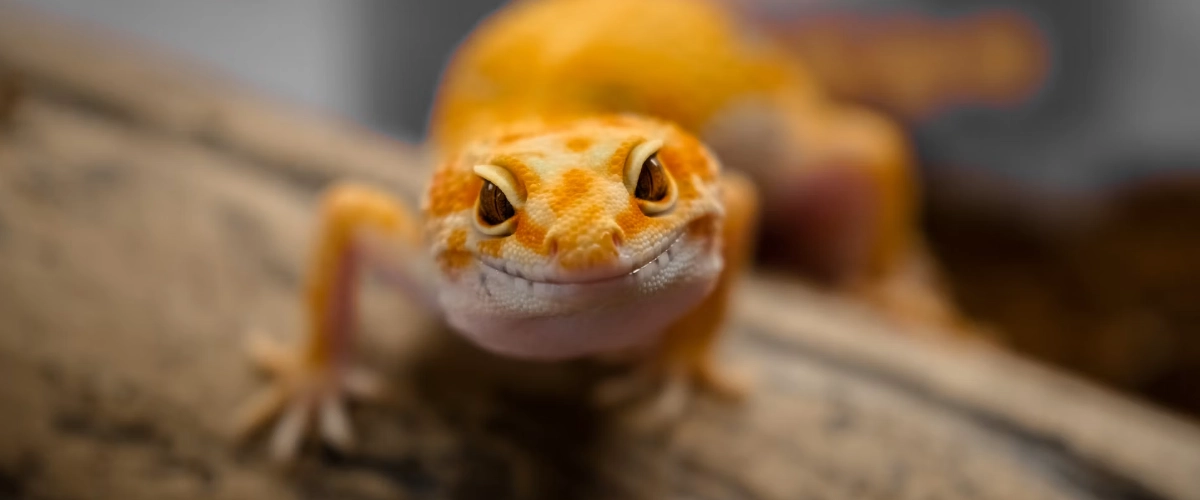
Leopard geckos are hardy, ground-dwelling lizards, but they still depend on a properly prepared enclosure for heat, UVB, shelter, hydration and safe feeding. The easiest way to avoid problems is to build and test the setup before the gecko comes home.
This guide covers enclosure size, heating, UVB, humidity, feeding, hides, substrate and the equipment to prepare before buying a Leopard Gecko from West Cork Reptiles.
Before You Buy a Leopard Gecko
Have the vivarium running for at least a week before introducing the animal. This gives you time to check the temperature gradient, humidity and lighting and to correct any problems without stressing the gecko.
Enclosure Size and Layout
Leopard geckos are terrestrial, so usable floor area matters. The enclosure should be secure, well ventilated and easy to clean, with a warm side, a cooler side and several secure hiding places.
The RSPCA recommends a minimum adult vivarium of around 60 cm long × 40 cm high × 30 cm deep, while encouraging owners to provide as much space as practical.
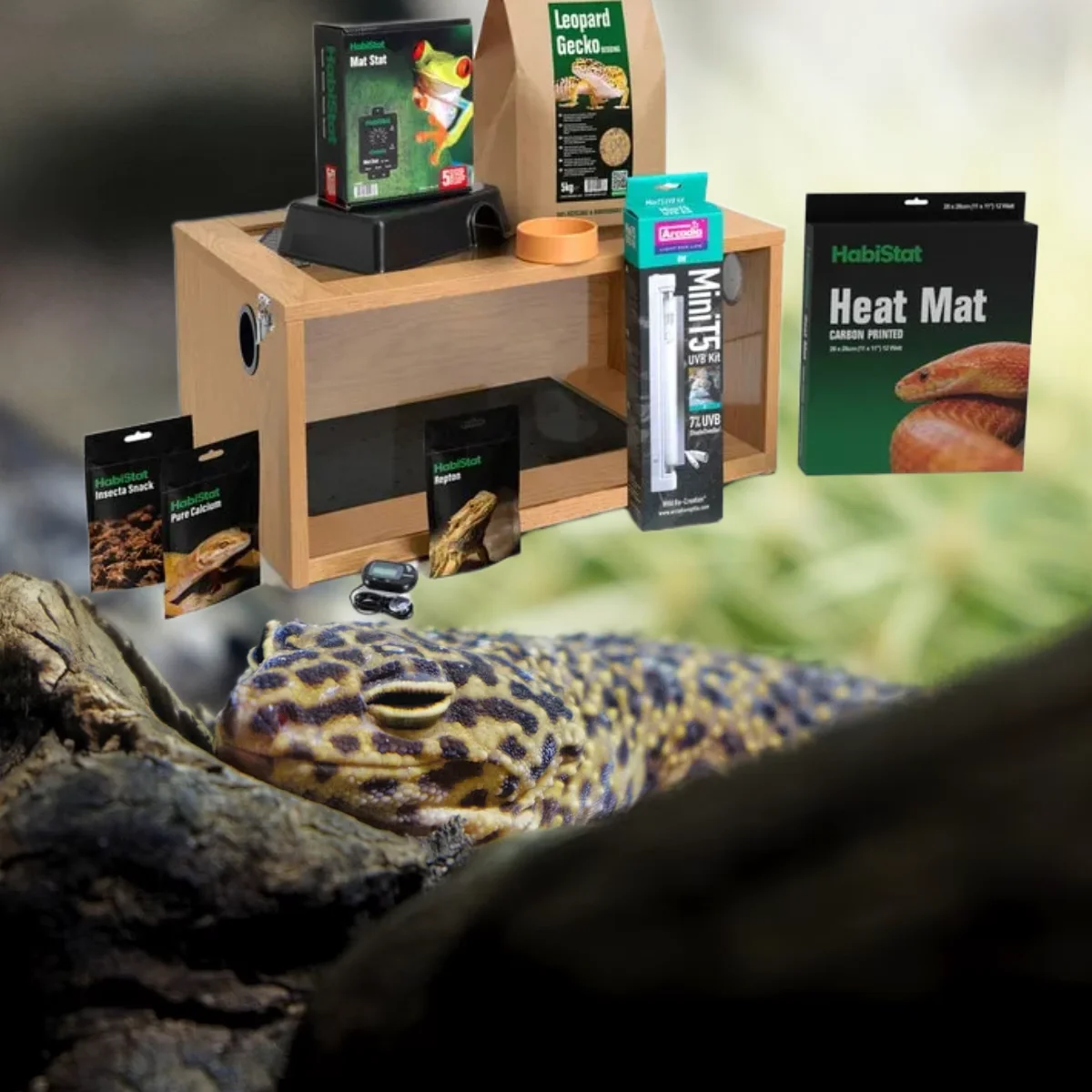
The HabiStat Leopard Gecko Starter Kit includes a 61 × 38 × 30 cm Oak Tall Terrainium and is sold as a starter setup for juvenile Leopard Geckos. As your gecko grows, review whether the enclosure still provides enough usable space and an appropriate temperature and UV gradient.
Heating, UVB and Humidity
A Leopard Gecko must be able to move between warm and cool areas. Heat sources should be thermostatically controlled and temperatures should be checked with reliable thermometers rather than relying only on the thermostat dial.
- Basking zone: approximately 28–30°C.
- Cool end: approximately 24–26°C.
- Night: daytime heat can be switched off if the room remains above about 18°C; supplementary non-light-emitting heat may be needed in colder rooms.
- Humidity: normally around 30–40% at the cool end.
- Humid hide: provide a separate moist hide to support healthy shedding.
- UVB: provide a low-level UV gradient, with a target around UVI 0.7 in the basking area fading to zero in the shade.
The starter kit currently sold by West Cork Reptiles includes an Arcadia ShadeDweller UVB lamp, a HabiStat heat mat, Mat Stat and digital thermometer. These components still need to be installed and monitored correctly for the specific enclosure.
UVB output changes with distance, reflectors and mesh. Follow the lamp manufacturer’s installation guidance and replace the lamp according to the recommended schedule.
Feeding a Leopard Gecko
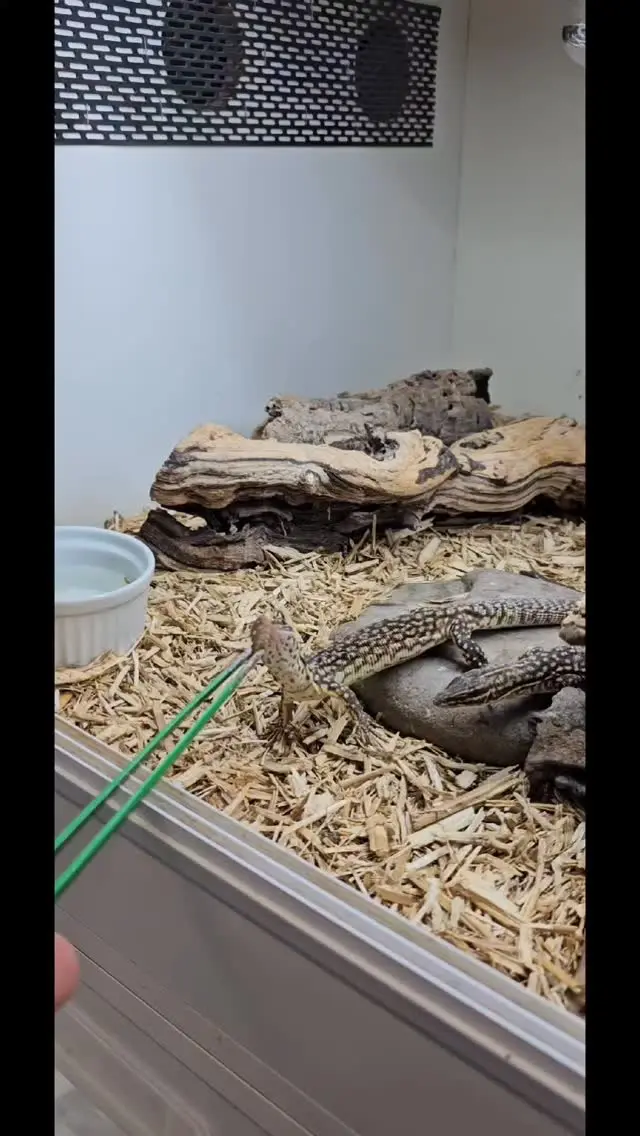
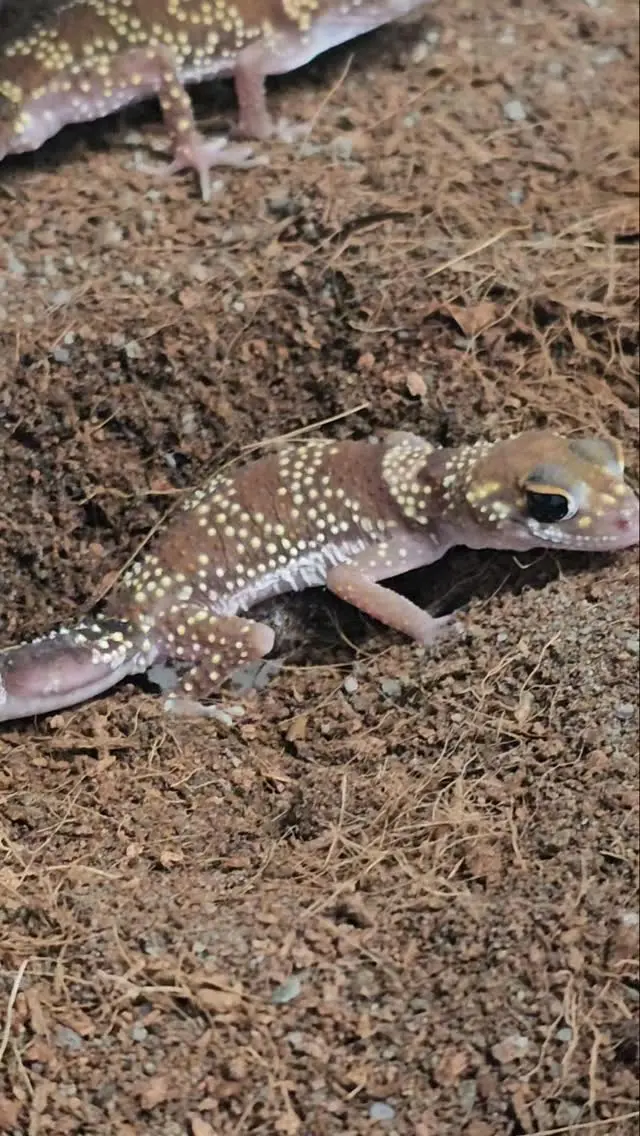
Leopard geckos are insectivores and should be offered a varied diet of appropriately sized live invertebrates.
Suitable feeders include crickets, locusts and calciworms. Avoid relying heavily on high-fat treats such as waxworms. Feeder insects should be well hydrated and gut-loaded before feeding.
Young geckos generally eat more frequently than adults. The RSPCA suggests feeding juveniles daily and adults around every other day, while monitoring body condition and weight.
Lightly dust livefood with suitable calcium and vitamin supplements according to the manufacturer’s instructions. A well-designed UVB system and correct supplementation should work together.
Hides, Substrate and Enrichment
Your gecko should be able to choose temperature without having to choose between warmth and security. Provide hides at both ends of the enclosure plus a humid hide.
- Provide several secure hides across the warm and cool zones.
- Add low, sturdy branches, rocks or slate to create climbing and basking opportunities.
- For healthy adults in a well-managed enclosure, a suitable soil/sand style mix can be used.
- Very young geckos are generally better kept on a non-loose substrate until they are established and feeding well.
- Avoid calcisand, beech chips and other unsuitable loose substrates.
- House Leopard Geckos individually unless you have expert reasons and experience for doing otherwise.
West Cork Reptiles stocks HabiStat Leopard Gecko Bedding and the complete starter kit also includes bedding and sphagnum moss for the humid hide.
What to Buy Before Your Leopard Gecko Arrives
The exact list depends on the age of the gecko and the enclosure, but these are the main items to prepare.
- Suitable enclosure or starter kit: with enough floor area to create a proper warm and cool side.
- Thermostatically controlled heat source: appropriate for the enclosure design.
- Low-output UVB lighting: positioned to create a safe UV gradient.
- Digital temperature monitoring: check both the warm and cool zones.
- Hygrometer: monitor humidity at the cool end.
- At least three hides: warm, cool and humid.
- Suitable substrate: matched to the age and health of the gecko.
- Shallow water dish: clean fresh water available at all times.
- Livefood and supplements: varied insects, calcium and vitamin products.
Bringing Your Leopard Gecko Home
Give the gecko time to settle. Avoid unnecessary handling during the first week and allow it to establish its feeding, hiding and basking routine.
Check the individual West Cork Reptiles listing for the animal’s current feeding details, sex and approximate age. Live reptiles are not sent by standard parcel courier; collection or livestock delivery is arranged individually.
If you are unsure whether your setup is ready, review the Buying Info page or contact West Cork Reptiles before placing the order.
Health and Responsible Care
Changes in appetite, weight, movement, shedding or droppings can be signs that husbandry or health needs attention.
Incorrect temperatures, dehydration, poor UVB and calcium imbalance can contribute to serious health problems. If your gecko shows weakness, tremors, swollen limbs, abnormal movement or persistent feeding problems, contact a reptile-experienced veterinary professional.
Care reference: husbandry values in this article are based primarily on the current RSPCA Leopard Gecko care guidance, alongside current West Cork Reptiles product and buying information.